


AI Browsers Promise Convenience—But May Invite Chaos
ChatGPT Atlas is OpenAI’s newest creation: an AI-driven browser that can plan trips, book flights, order dinner, and even handle online research automatically. Users can ask Atlas to read a page, summarize it, and take the next step—all within a single chat window. It’s sleek, fast, and ambitious.
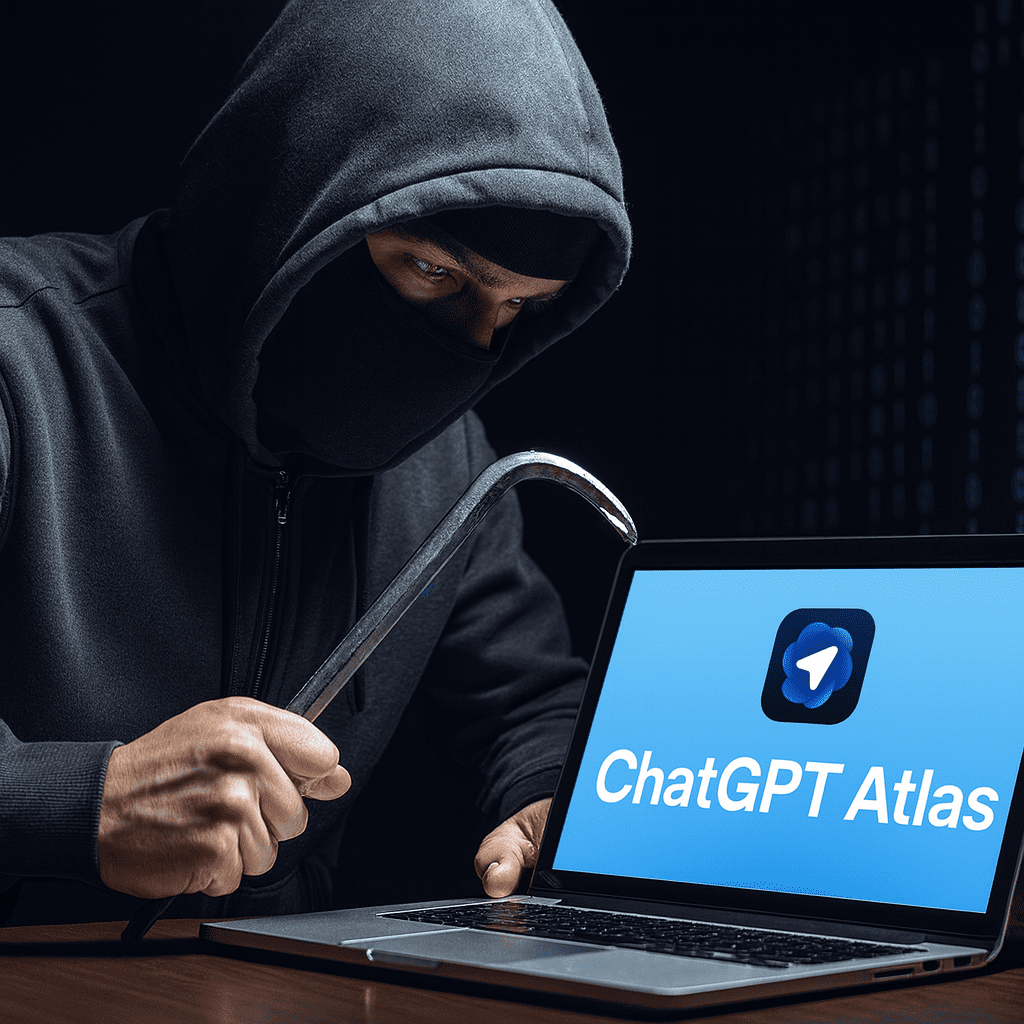
But there’s a catch. Security researchers are warning that Atlas—and similar AI browsers like Perplexity’s Comet—may unintentionally invite attackers straight into a user’s private data. Within hours of launch, cybersecurity experts began testing and documenting new ways that malicious code could manipulate the browser’s “agent mode,” hijack its clipboard, or even embed permanent hidden instructions into its memory.
Hidden Commands and Tainted Memory
Agentic browsers operate differently from Chrome or Safari. Instead of waiting for users to click, they can interpret natural language, execute commands, and make decisions online. That gives them incredible utility—and enormous exposure.
Researchers at LayerX Security revealed an exploit that lets attackers inject malicious instructions directly into ChatGPT’s persistent memory through a standard CSRF (Cross-Site Request Forgery) attack. Once stored, those instructions can survive across sessions and devices, essentially turning a feature meant to “remember helpful details” into a weapon.
Michelle Levy, head of security research at LayerX, explained that the real danger is persistence: “By chaining a CSRF to a memory write, an attacker can invisibly plant instructions that survive across devices, sessions, and even browsers.” In plain English: once your AI assistant is compromised, it stays compromised.
OpenAI Responds: “Prompt Injection Is Still a Frontier Problem”
Dane Stuckey, OpenAI’s Chief Information Security Officer, addressed these concerns directly in a post on X, where he outlined the company’s approach to mitigating risks:
“We’re excited to see how this feature makes work and day-to-day life more efficient and effective for people. ChatGPT agent is powerful and helpful, and designed to be safe, but it can still make (sometimes surprising!) mistakes. One emerging risk we are very thoughtfully researching and mitigating is prompt injections, where attackers hide malicious instructions in websites, emails, or other sources, to try to trick the agent into behaving in unintended ways.”
Stuckey said OpenAI has performed extensive red-teaming, implemented new model training techniques, overlapping safety measures, and built rapid-response systems to block attack campaigns. He also emphasized new controls such as “logged out mode,” where the AI can act without access to user credentials, and “Watch Mode,” which alerts users when sensitive actions are taking place.
But he didn’t sugarcoat the challenge: “Prompt injection remains a frontier, unsolved security problem, and our adversaries will spend significant time and resources to find ways to make ChatGPT agent fall for these attacks.”
Corporate Adoption Is Outpacing Caution
Despite the warnings, enterprise adoption is moving fast. Cyberhaven Labs reported that 27.7% of companies already have at least one user running ChatGPT Atlas, with some organizations seeing up to 10% of employees downloading it during launch week. The browser is already installed on nearly 2% of corporate Mac devices, with especially strong uptake in the technology, pharmaceutical, and financial industries.
The reason? Familiarity and convenience. Employees already using ChatGPT see Atlas as the next logical step. The problem, as security teams point out, is that no one has fully mapped the risks yet.
Early Exploits Highlight Hidden Dangers
Security researchers have already documented practical attack methods:
- Clipboard hijacking: Hidden buttons can secretly overwrite clipboard data, redirecting users to malicious sites when they paste normally.
- Persistent memory corruption: Attackers can taint AI memory, causing lasting infections that follow users across sessions and devices.
- Stealth commands in images: Invisible instructions embedded in graphics can trigger actions when the AI processes screenshots or page summaries.
It’s the kind of security landscape where one click—or even one automated “helpful” action—can set off a chain reaction.
Expert Warnings and Real-World Advice
As an AI and cybersecurity commentator, I’ve spoken directly with several security professionals who’ve tested Atlas. Their advice was blunt: don’t download it on any device that contains sensitive data. That includes laptops with stored passwords, financial information, or confidential work files. One analyst compared early AI browsers to “leaving your front door open because your new lock says it’s smart.”
They’re right. The technology may eventually be transformative, but right now, it’s raw.
My Take: Shiny New Object Syndrome
There’s no denying that AI browsers like ChatGPT Atlas and Perplexity Comet could change how we experience the internet. They could merge searching, shopping, and communicating into a single intelligent workflow. But for now, they’re shiny new objects—exciting to play with, risky to rely on.
It’s a lot like buying the first model year of a new car. The design might look incredible, but early buyers end up finding the quirks, bugs, and recall notices. Personally, I never buy the first or second year of a new vehicle. The same logic applies here: let someone else test-drive it first.
AI browsers are still working out the kinks—security, privacy, and reliability among them. Until developers patch the weak spots and prove consistent protection, I’d hold off installing ChatGPT Atlas on any machine tied to personal or financial data.
Playing It Safe in the AI Browser Era
AI-assisted browsing will eventually become standard, but it’s early days. Companies like OpenAI and Perplexity are moving fast to deliver automation and intelligence, yet the security industry is still catching up. For most users, the safest move right now is to observe, learn, and wait.
Innovation always comes with risk, but in this case, the price of curiosity could be your private data. As convenient as an AI assistant might sound, security should come first—and in the browser wars of 2025, it’s still too early to hand over the keys.
Sources:
https://thehackernews.com/2025/10/new-chatgpt-atlas-browser-exploit-lets.html
https://lifehacker.com/tech/chatgpt-atlas-clipboard-injection-vulnerability
https://fortune.com/2025/10/23/cybersecurity-vulnerabilities-openai-chatgpt-atlas-ai-browser-leak-user-data-malware-prompt-injection/
https://x.com/cryps1s/status/1981037851279278414